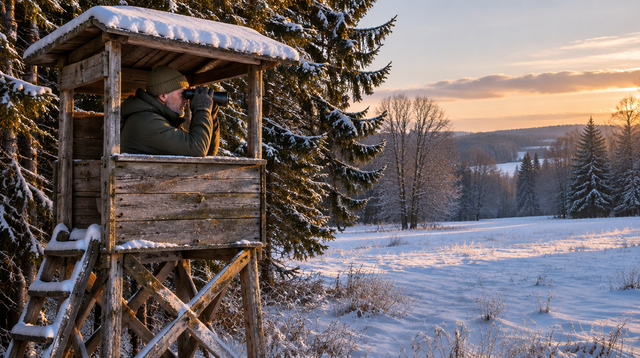
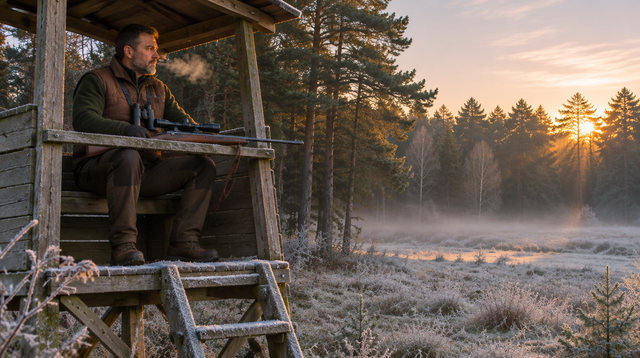
What to wear on a driven hunt
Signal orange, quiet layers and boots that grip: how to dress for a long day of waiting on the stand and walking between drives.
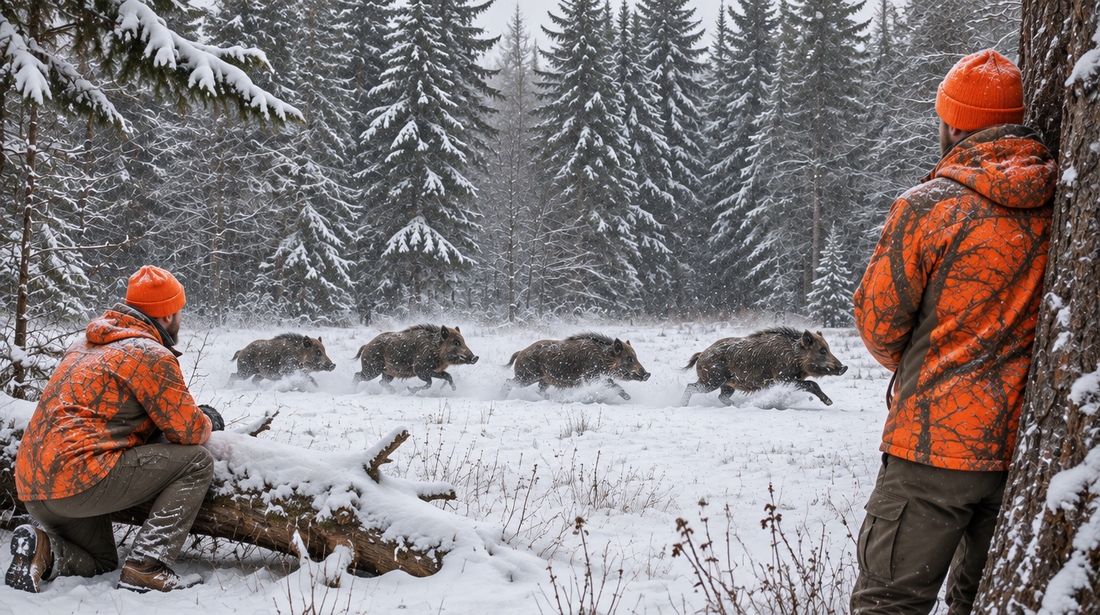
- Wear certified signal orange on your torso and head, so every gun and beater can place you.
- Dress in quiet layers you can open and close: you will stand still for an hour, then walk hard.
- Carry the radio and cartridges where your hands find them, and wear boots that grip on wet banks.
A driven hunt asks two things of your clothing. On the stand you wait, often for an hour or more, in cold air and sometimes rain. Between drives you walk, climb banks and cross ditches. Add twenty guns in one wood and beaters you hear before you see, and one more thing matters above all: everyone needs to know where you are.
This guide covers what to wear on a driven hunt, from the signal layer to the boots, and ends with a short checklist for the night before.
Be seen first: signal orange
Orange is the one part of a driven hunt outfit that is not a matter of taste. Many hunt organisers ask for it on the invitation, and in some regions it is required. If the invitation says nothing, wear it anyway. Game does not see orange the way we do, but the other guns do.
Look for clothing that is CE marked and certified to PPE category II. That tells you the colour and the area of orange meet a tested standard, not just that the fabric looks bright in the shop. Cover the torso and the head: a gun on the next stand sees your shoulders and your cap long before your legs.
The simplest setup is a certified signal vest or jacket over your normal layers, plus an orange cap. A mesh vest with an expansion panel fits over a thick jacket and lets air out when you walk. A softshell jacket in orange does both jobs in one piece on milder days.
Layer for waiting and walking
The mistake most hunters make is dressing for the walk to the stand, or for the stand only. You need both. Think in three layers:
- Base layer: close fitting and moisture wicking, so sweat from the walk does not turn cold on the stand.
- Mid layer: a fleece or light insulated piece. Quiet fabric matters here, because you will move your arms when game comes through.
- Outer layer: water repellent or waterproof against rain and wind, with room for the layers underneath and the signal vest on top.
Open the outer layer and carry the mid layer when you walk between drives. Close everything up as soon as you reach the stand, before you start to feel cold. It is far easier to stay warm than to get warm again.
Dress for the stand, then open up for the walk
Arrive at the stand warm and dry. Damp clothing from a fast walk is what makes the second hour of a drive so cold.
Trousers, boots and gloves
Driven hunts are rarely on flat, clean ground. Trousers need stretch at the knee and seat, so you can climb a bank or step over a fallen trunk without fighting the fabric. Reinforced or thorn resistant fabric on the lower leg helps in bramble. Green or brown trousers are fine on most hunts; orange and green trousers add visibility when you stand low in cover or move with the beaters.
Boots should be waterproof and have a sole that grips on wet leaves and clay. For long cold drives in winter, choose an insulated boot and a good wool sock. For warmer autumn hunts with more walking, a lighter unlined boot is more comfortable.
Gloves should be thin enough to work the safety and load quickly. Many hunters wear a thin shooting glove and keep a warmer mitten in a pocket for the waiting.
Before you leave home
- Signal vest or jacket, and an orange cap or hat cover.
- Base layer, mid layer and outer layer, plus a spare mid layer in the car.
- Radio, with a pocket or strap that holds it in place.
- Cartridges in a pocket you can reach with gloves on.
- Waterproof boots and a spare pair of socks.
- Thin gloves, warm mittens and a neck gaiter.
Questions hunters ask
Do I need to wear orange on a driven hunt?
Many organisers ask for it and some regions require it. Check the invitation and the hunt rules. If they say nothing, wear certified orange on your torso and head anyway.
Is a signal vest enough, or do I need an orange jacket?
A certified vest over your jacket covers the torso and is the most flexible choice, because it goes over any layer. Add an orange cap or hat cover for the head.
What should I wear under the signal vest?
A moisture wicking base layer, a quiet fleece or light insulated mid layer and a water repellent or waterproof outer layer, sized so the vest still closes over all of it.
Jakne, prsluci i kape visoke vidljivosti u narandžastoj boji, da vas u pogonskom lovu vidi svaki strelac.